
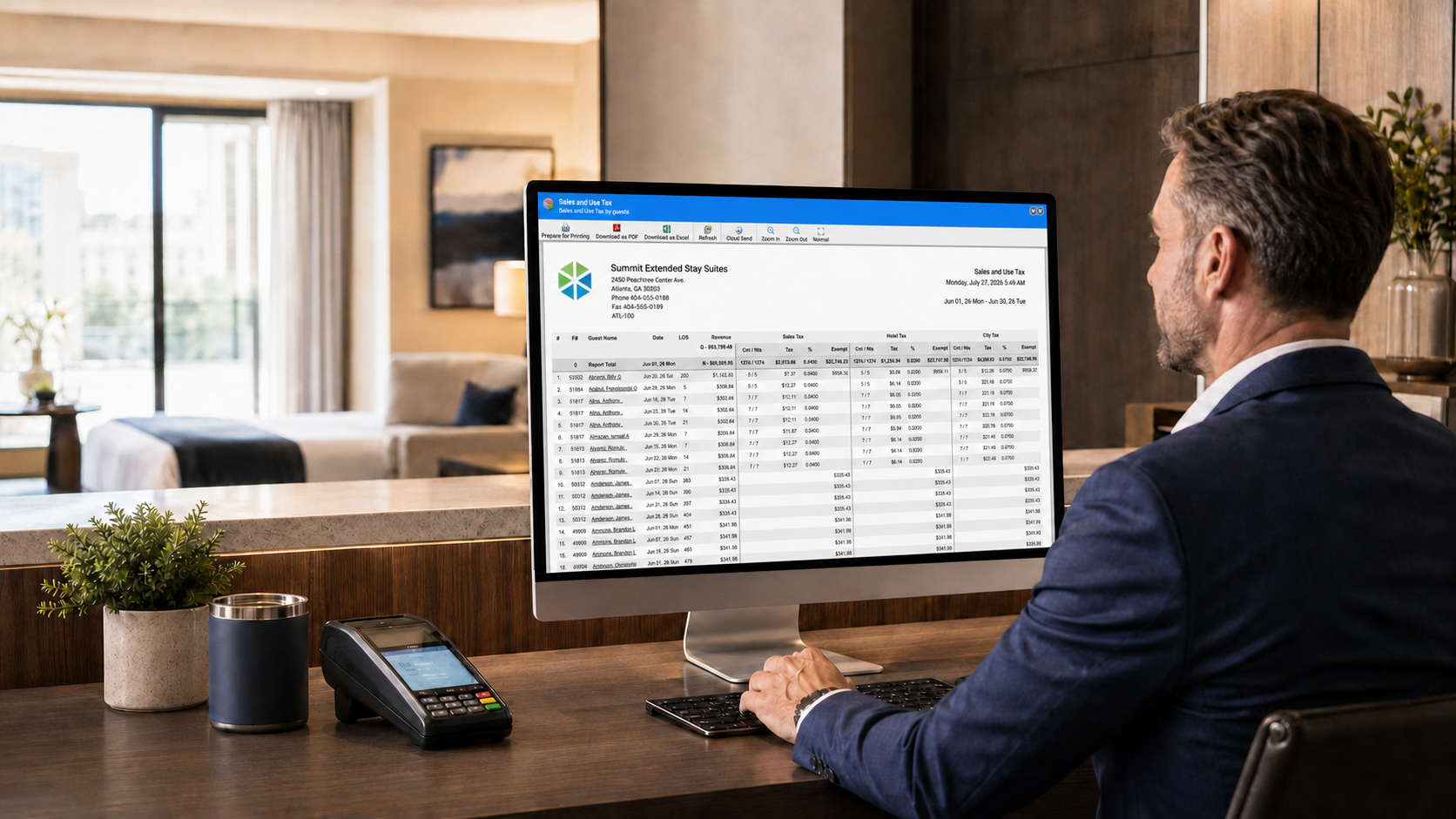

Compare Extended Stay PMS software with traditional hotel PMS platforms. Learn why long stays require different technology for rates, taxes, payments, folios, extensions, inventory, and revenue.

Discover why purpose-built extended stay hotel software matters. See how true extended stay PMS technology handles longer stays, recurring payments, taxes, rates, folios, and revenue differently from traditional hotel software.

Gearco Rate Lock™ helps extended stay properties protect intended rates and reduce revenue leakage across long-term stays. In a 12-month review of five properties, Rate Lock was associated with $1.93M in additional revenue, averaging $385,872 per property and 20.57% improvement.

What True Extended Stay Operators Should Expect From a Modern PMS True extended stay is not traditional hospitality with a longer departure date. Long-term guests bring changing rates, recurring payments, tax limits, renewals, deposits, damages, and folios that may remain open for years. A modern PMS should manage these realities without workarounds, spreadsheets, or repeatedly checking guests out and back in. Built for Longer Stays Operators should expect: Flexible daily, weekly, and monthly rates Unlimited-length guest folios Automated renewals and recurring charges Accurate tax-limit management Digital agreements and documentation Complete guest and payment histories If a system treats an extended stay as an unusually long nightly reservation, it was not built for True Extended Stay. Revenue Protection Built In Missed fees, inconsistent rates, unauthorized discounts, unpaid balances, and delayed renewals can quietly reduce profitability. A modern PMS should help properties maintain rate integrity, control adjustments, track balances, manage deposits, protect inventory, and preserve a complete financial audit history. Technology should do more than process transactions. It should actively help protect the revenue a property has earned. Automation With Control Recurring charges, renewals, tax transitions, reporting, housekeeping assignments, and guest communications should not depend on someone remembering every step. The right PMS automates routine work while allowing management to establish rules, control permissions, approve exceptions, and review employee activity. The goal is not to replace people. It is to give them better tools and fewer opportunities for costly mistakes. One Connected Operation Extended stay involves more than reservations. Front desk, accounting, housekeeping, maintenance, security, and management all contribute to the operation. A modern PMS should provide one connected view of: Occupancy and availability Guest balances and renewals Housekeeping and maintenance Room readiness Employee activity Revenue and property performance Teams should not depend on handwritten notes, disconnected spreadsheets, or word-of-mouth updates to know what is happening. Accountability and Security Long-running guest accounts involve payments, refunds, deposits, adjustments, and sensitive personal information. Operators should expect role-based access, approval controls, secure payment processing, and detailed audit trails. Management should always be able to determine who completed an action, when it happened, and what changed. Accountability should be built into the system, not reconstructed after something goes wrong. Better Decisions and Better Experiences A modern PMS should give managers accurate, real-time reporting without requiring them to combine reports or rebuild data in spreadsheets. It should also make daily work easier for employees and the stay more convenient for guests through accurate billing, faster service, secure payments, digital agreements, and simpler renewals. The best technology works quietly in the background. Guests may never know what made their experience easier, but they will notice when it does not work. Implementation and Support That Deliver Even strong technology can fail when implementation is rushed or poorly managed. Operators should expect structured planning, accurate configuration, validated data, role-based training, workflow testing, and hands-on go-live assistance. Support should continue long after launch and come from people who understand both the software and the realities of extended stay. Signing the agreement should begin the partnership, not end it. The Standard for True Extended Stay A modern PMS should simplify long-term guest management, automate routine work, protect revenue, strengthen accountability, connect property teams, and support better decisions. For 30 years, Gearco has focused on the operational realities of True Extended Stay. Our platform is purpose-built to give properties greater control, stronger performance, and a better foundation for growth. True Extended Stay deserves technology built specifically for it.
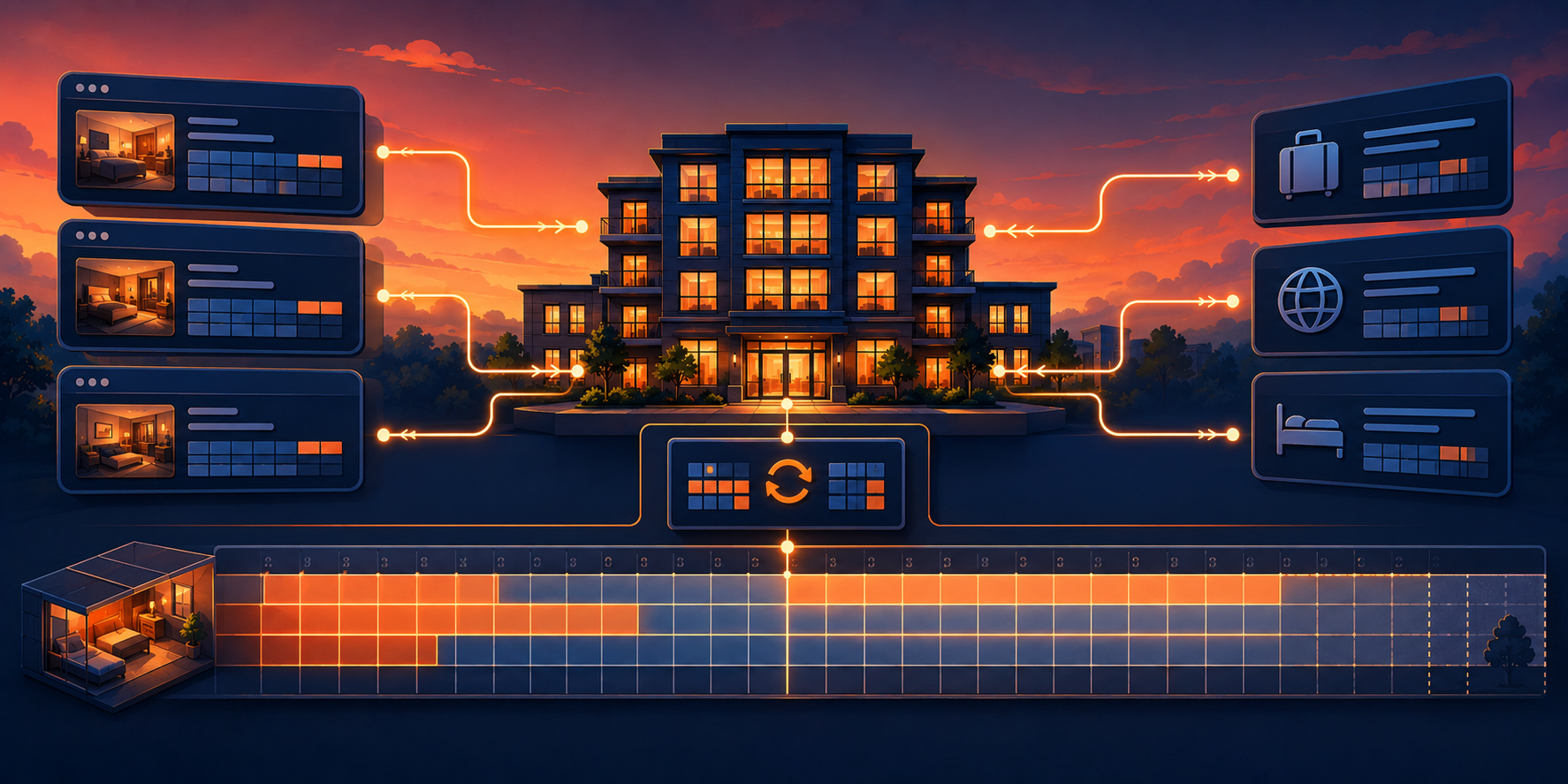
Smarter Stays Start Here: Gearco Cloud Reservations™ Managing reservations for extended stay properties isn’t just about filling rooms—it’s about protecting inventory, forecasting guest turnover, and driving revenue across multiple channels. Gearco Cloud Reservations™ was built for exactly that. With seamless integration across your website, central reservation systems, and booking channels, this intelligent solution allows you to receive and manage reservations effortlessly, while safeguarding your long-term availability and streamlining your operation. A Centralized Reservation System Designed for Extended Stay Gearco Cloud Reservations is more than just an online booking tool—it’s your real-time, two-way connection between the Gearco PMS, your direct website, and targeted OTA (Online Travel Agency) channels. With it, your inventory stays in perfect sync across every touchpoint. This means no more overselling. No more lost reservations. No more wasted time manually reconciling bookings. Your property’s availability and pricing are always current—ensuring smoother guest intake and a better-managed stay cycle. Protect Your Extended Stay Inventory with LOS Controls For extended stay operators, Length of Stay (LOS) protection is mission-critical. Without it, short-term bookings can cannibalize high-value long-term availability, leaving revenue on the table. Gearco solves this with built-in LOS enforcement that lets you define minimum and maximum stay rules based on unit type, channel, season, or occupancy. You can: Restrict short-term stays from specific channels Lock high-value units for longer-term guests Auto-deny or redirect short bookings from extended inventory Dynamically adjust LOS policies based on demand and expected departures This protects your most profitable inventory from being tied up by low-value, short-term reservations—giving you revenue control without manual intervention. Manage Expected Departures with Confidence One of the key challenges in extended stay is tracking and forecasting departures to maintain occupancy flow. Gearco Cloud Reservations automatically factors in upcoming check-outs, renewal rules, and projected LOS so you can confidently accept new bookings without overlap or risk. You’ll always know: Which units will be available next week or next month Which guests are likely to renew How much flexible inventory you truly have This visibility is essential for maintaining high occupancy without overbooking or underutilizing your assets. Multi-Channel Support Without the Complexity Gearco Cloud Reservations allows you to accept bookings from your website, OTAs, or other custom channels, all while maintaining complete control. It gives you the freedom to drive direct bookings while still tapping into third-party demand—without sacrificing LOS rules or rate integrity. Your availability, pricing, and rules are synchronized in real time across all channels. And best of all, updates made in Gearco automatically cascade everywhere—saving you from duplicate data entry or costly errors. Payment Security and Prepaid Tax Handling, Built In Gearco Cloud Reservations also simplifies the payment process with tokenized credit card handling, keeping you fully PCI compliant. No sensitive data is stored locally, reducing your risk and compliance workload. And for OTA bookings, prepaid tax management is handled automatically—ensuring taxes are posted correctly to folios, revenue is booked accurately, and audits are stress-free. Key Benefits at a Glance: Seamless two-way sync with Gearco, your website, and OTAs Intelligent LOS protection to safeguard extended stay inventory Forecasting tools to manage expected departures and renewals Real-time control of availability, pricing, and restrictions Secure tokenized payments for PCI compliance Automated prepaid tax handling for OTA reservations Centralized control without added workload Grow Smarter. Operate Smoother. Stay in Control. Gearco Cloud Reservations™ is the backbone of modern extended stay booking strategy. It’s built to help you capture more revenue, protect your long-term inventory, simplify operations, and deliver a seamless guest experience—online and on-site. Whether you're managing a single location or a portfolio of properties, Gearco gives you the clarity and control to grow with confidence. Seamless booking. Smarter growth. That’s the Gearco way.

True Extended Stay Demands Control. Gearco Cloud Paper™ Delivers It. Extended stay businesses deals with longer guest cycles, more complex agreements, and more moving parts. Traditional hotel systems weren’t built for our world—and neither were paper-based processes. That’s why Gearco created Cloud Paper™, a fully digital document system designed specifically for the True Extended Stay environment. Whether you’re managing one location or a regional portfolio, Cloud Paper gives the power to enforce policy, streamline check-ins, protect revenue, and cut down on waste—without adding extra work to your front desk. This isn’t just about going paperless. This is about regaining operational control. Document Chaos? Gone. Extended stay properties deal with more paperwork than the average hotel: Guest registration forms Long-term stay acknowledgments Damage waivers Deposit agreements Occupancy limits Special terms Multiple guests on one folio Cloud Paper turns all of that into a clean, efficient digital process. No more binders, no more chasing down forms, no more wondering where that last acknowledgment went. Every document is captured, stored, and instantly accessible—for up to 7 years. And yes, that includes: Initials and full signature Photo capture of up to 4 guests Digital timestamps Multi-language and multi-property document versions Tablet-ready signing on-site or remotely Set Expectations. Capture Compliance. Eliminate Excuses. Guests don’t always remember what they agreed to. With Cloud Paper, they don’t have to—because your policies are spelled out, acknowledged, and stored before a key is ever handed over. You define the acknowledgment rules, the language, the required fields, and the flow. Cloud Paper simply enforces it. Every guest signs what matters: whether it’s pet policies, cleaning schedules, renewal rules, or payment expectations. And because it’s digital, it’s accountable. If a guest disputes a charge or a rule, you’ve got the signed, time-stamped proof with their initials and photo to back it up. That’s leverage. That’s protection. Take Pressure Off the Front Desk Let’s be honest, front desk clerks are already juggling enough. Cloud Paper helps take document enforcement out of their hands and puts it where it belongs—in a system that doesn’t forget, doesn’t get tired, and doesn’t cut corners. No more printing stacks of forms or hoping they’re filled out right. No more guessing if that roommate signed the damage waiver. Cloud Paper walks the guest through each document on a tablet, ensuring nothing is skipped, missed, or left unsigned. Whether you’re checking in at 9 a.m. or midnight, Cloud Paper keeps the process consistent and clean. Custom Contracts Built for How You Operate Extended stay operations need flexibility. One size doesn’t fit all—and it shouldn’t. Gearco’s Cloud Paper lets you build your own document agreements for each location or stay type: Long-term occupancy terms? Covered. Weekly renewal disclosures? Easy. Damage retention or deposit authorizations? Locked in. Corporate account contracts or group bookings? Done. Each document can be tailored with dynamic logic, so it adapts based on the guest’s length of stay, rate type, or even folio size. It’s document automation that works the way you work—not the other way around. Modern Tools for Modern Operations You don’t need expensive equipment. Cloud Paper runs on Android or IOS tablet platforms, so you’re not forced to be locked into costly hardware. It’s clean. It’s clear. It’s professional. And it reinforces your standards from the very first interaction. From Paperwork to Performance In True Extended Stay, your documentation isn’t a formality—it’s your frontline. It’s what protects you from revenue loss, property damage, and the headaches of unclear expectations. Gearco Cloud Paper replaces loose paper and loose policies with structured digital enforcement—helping you run tighter, protect more, and operate with confidence. This is more than digital signatures. This is document intelligence for True Extended Stay. Stop chasing signatures. Start controlling outcomes. Cloud Paper™ from Gearco is how extended stay gets it done.

Protect Your Property. Set Expectations. Recover What’s Yours. Extended stay operators know the truth: the longer the stay, the greater the risk. Whether it’s unpaid balances, property damage, or broken rules, problematic guests can cost you thousands — and it often goes uncollected . Gearco’s Do Not Rent (DNR) Revenue Recovery™ flips the script by helping you enforce accountability, protect your property, and collect lost revenue — without dragging your team into manual collections. The Cost of Doing Nothing Most properties have faced it: a guest checks out with a balance due. Maybe it’s damage, a skipped payment, or an unpaid deposit. In a traditional setup, it’s written off as a loss — or handed to a collections agency that barely recovers anything. And then… that same guest shows up again weeks or months later. A new stay. A fresh folio. No mention of the unpaid balance. With Gearco, that doesn’t happen. Introducing DNR Revenue Recovery™ Gearco’s DNR Revenue Recovery™ gives you the power to tag guests who leave with outstanding balances or cause damage , and automatically flag them in the system. This isn’t just about denying future stays — it’s about using their return visit to recover the revenue they left behind. Here’s how it works: Based on your business rules, the system will auto-apply the DNR tag for any guest with a flagged issue. If that guest attempts to check in again — now or later — Gearco will automatically enforce recovery . Outstanding balances will be added to the new folio , and cannot be bypassed without management override. Staff are alerted, and clear rules are in place: no stay without payment . You protect your business, and you get paid . Protecting Your Assets Without Extra Effort DNR Revenue Recovery doesn’t require a collections department or complex follow-ups. It runs in the background, triggered by the rules you set. It also helps you: Preserve asset condition by discouraging reckless guest behavior Establish clear expectations that guests can’t walk away from charges Avoid repeat losses by ensuring flagged guests can’t slip through the cracks Protect staff from conflict with system-enforced policies that do the hard part for them And with photo ID tagging and cross-property visibility , your entire brand is protected — even across multiple locations. Setting the Tone From Day One With DNR in place, guests quickly understand that this is not a property they can take advantage of. Your expectations are clear. Your rules are consistent. And your team is backed by technology that reinforces both. This isn’t about being harsh — it’s about being professional. When guests know there are real policies in place — and that those policies are enforced — they behave differently. They pay on time. They treat the property with respect. And they think twice before walking away from a bill. Recover More. Stress Less. Traditional loss recovery methods are time-consuming, inconsistent, and usually ineffective. Gearco’s DNR Revenue Recovery™ turns your next interaction with a flagged guest into a recovery opportunity — without disrupting your front desk, your managers, or your workflow. In an industry where margins are tight and risks are high, it’s the smartest way to protect your bottom line without lifting a finger. Stop writing off unpaid balances. Start recovering what’s yours — with zero guesswork. Gearco DNR Revenue Recovery™ makes it automatic.

Streamline rate management for extended stays with Gearco's automated solutions. Enhance revenue & guest satisfaction today!

L.O.S Protection™: Safeguarding Inventory from the Unpredictable in Extended Stay In extended stay operations, success is built on consistency — consistent guests, consistent revenue, and consistent control of your room inventory. But there’s one reality that every extended stay operator knows all too well: guests don’t always leave when you expect them to — and sometimes, they leave when you don’t expect them to at all . Late payments. Unexpected departures. Mid-stay evictions. These aren’t edge cases — they’re weekly occurrences in extended stay. And every time a guest leaves unexpectedly, the ripple effect hits your room availability, your future bookings, and ultimately, your bottom line. That’s where Gearco’s L.O.S Protection™ steps in. The Challenge: Extended Stay is Anything But Predictable Unlike transient hotel stays with fixed check-in and check-out dates, extended stay guests often live in a state of semi-permanence. They stay “until next Friday,” “until the job wraps,” or “until housing comes through.” And while that flexibility is what makes extended stay appealing, it’s also what makes it complex to manage. Common disruptions include: Guests paying late and holding rooms without confirmed departure Sudden evictions requiring accelerated turnover Last-minute changes to guest itineraries Unknown or open-ended departures that block long-term bookings Each scenario leaves operators guessing whether a room will truly be available tomorrow — or if a scheduled arrival will collide with an overstaying guest. The Solution: Smarter Availability Management with L.O.S Protection Gearco’s L.O.S Protection™ is built to take the guesswork out of room availability. Using historical stay data and predictive algorithms , this feature monitors guest profiles and behaviors to calculate the probability of departure — and intelligently protects your inventory based on realistic expectations, not just theoretical checkout dates. Instead of letting any reservation block a room, L.O.S Protection™ cross-references: Past stay patterns Payment behavior Unit-level turnover trends Reservation timing and type This enables your system to make smarter decisions about which rooms to protect, which to hold, and which to flag for review — helping you avoid overbookings, reduce last-minute conflicts, and preserve revenue integrity . Protecting Revenue, One Room at a Time When a room is misallocated due to an unanticipated departure or extension, the cost isn’t just operational — it’s financial. Lost bookings. Downtime. Unused inventory. L.O.S Protection™ helps operators shield high-value rooms from risky reservations while maximizing the utility of inventory that’s more flexible. By factoring in the “unknowns,” operators can: Confidently sell rooms without fear of double-booking Optimize availability for long-stay, high-value guests Reduce last-minute operational scrambles Maintain a more stable revenue pipeline A System That Thinks Like an Operator L.O.S Protection™ doesn’t replace operator judgment — it enhances it. By embedding intelligent, data-informed rules into your availability logic, Gearco empowers your team to focus on guest service and operational quality rather than playing booking Tetris every morning. This is especially critical in True Extended Stay , where occupancy is high, turnover is low, and flexibility is expected. You can’t afford to leave inventory decisions to chance — and with L.O.S Protection™, you don’t have to. The Bottom Line: Control in an Uncontrolled Environment Extended stay doesn’t follow the script of traditional lodging. That’s exactly why it’s so profitable — and why it’s so difficult to manage without the right tools. Gearco’s L.O.S Protection™ is purpose-built for this space , helping you anticipate the unpredictable, protect your best assets, and book with confidence. When every night matters, and every room counts, knowing when a guest is likely to leave is just as important as knowing when they’re scheduled to. That’s the insight L.O.S Protection™ brings — and it’s how Gearco helps you run smarter, leaner, and more profitably.
